.png)
Everyday Language Development: How Daily Routines Build Communication and Social Skills

Parents often think language development happens during structured teaching moments, therapy sessions, or educational activities. While those experiences can certainly help, some
of the most powerful opportunities for growth happen during the ordinary moments that occur every day.
Breakfast conversations, getting dressed, running errands, playing games, and helping with household tasks all create natural opportunities for communication. When we start viewing everyday interactions as opportunities for learning, language development becomes less about finding extra time and more about making the most of the moments that already exist.
The good news is that children don't need a perfectly planned environment to learn communication skills. They need responsive adults, meaningful interactions, and opportunities to practice in daily life.
Why Everyday Language Development Matters
Children learn language best when words have meaning and purpose. While flashcards and structured activities can teach vocabulary, everyday experiences help children understand how language is actually used.
When a child hears words connected to real experiences, they begin to understand not only what words mean but also when and how to use them. They learn that communication helps them get needs met, share ideas, solve problems, and connect with other people.
This is why everyday language development is so effective. The learning happens in context, making it easier for children to understand and remember new skills.
The goal isn't to turn every interaction into a lesson. Instead, it's about recognizing the opportunities that naturally exist throughout the day. These moments are just as valuable—often more valuable—than any structured program.
Building Everyday Language Development Through Daily Routines
Daily routines are one of the most overlooked tools for supporting communication growth.
Routines provide predictability, and predictability creates opportunities for participation. When children know what comes next, they can focus less on figuring out the activity and more on engaging with the people around them.
Think about something as simple as preparing a snack. A child can practice requesting items, making choices, answering questions, following directions, and commenting on what they see. These interactions often feel effortless because they occur naturally within the activity.
You might say, "What snack do you want?" and pause for your child to respond. Or narrate what you're doing: "I'm getting the crackers. They're crunchy." You're not teaching in a formal way. You're simply using language in a meaningful context.
The same is true during morning routines, bath time, grocery shopping, and bedtime. Rather than rushing through these moments, slowing down enough to invite participation can create countless opportunities for communication.
What This Looks Like in Practice
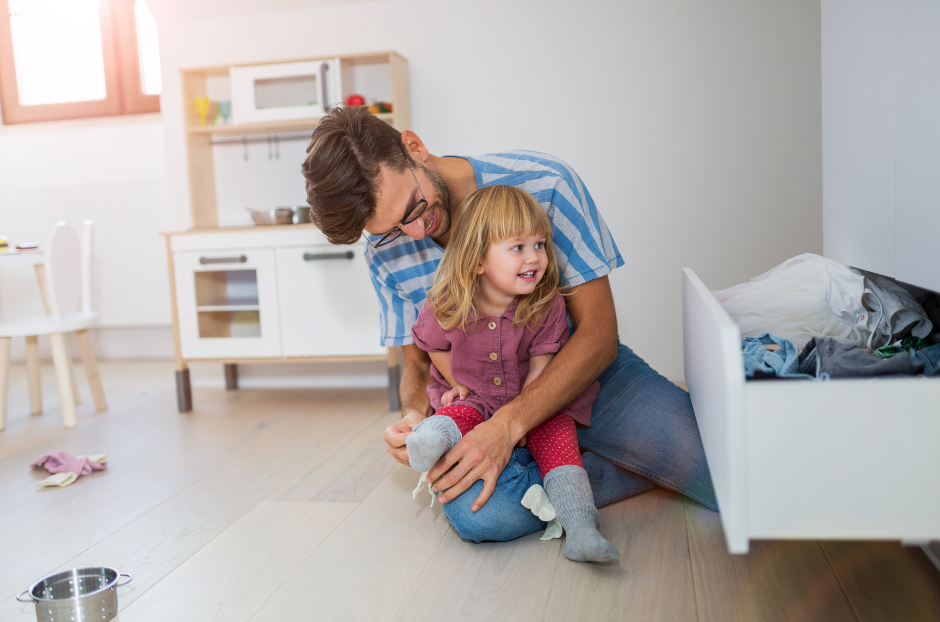
During a morning routine, there are natural opportunities for communication at every step. Getting dressed offers chances to use clothing vocabulary and make choices. "Which shirt do you want to wear—the blue one or the red one?" Bath time creates opportunities to use action words and describe sensations. "The water is warm. We're splashing. It's fun!"
Even grocery shopping can become a language-rich experience. Naming items as you shop. Asking your child to find things on the shelf. Describing colors, sizes, and textures. "Can you find the apples? They're red. Let's put them in the cart."
Over time, these small interactions add up and contribute significantly to language growth. What started as a simple daily task becomes a consistent opportunity for your child to hear language used naturally and to practice using it themselves.
Using Play to Support Social Interaction and Communication
Play is one of the most natural environments for communication development.
Children learn important social skills when they play with others. They practice taking turns, sharing attention, solving problems, and responding to what another person says or does. These experiences help build the foundation for meaningful relationships.
The value of play isn't found in having the perfect toy or activity. It's found in the interaction itself.
When adults join a child's interests, follow their lead, and create opportunities for back-and-forth engagement, communication becomes rewarding. Children begin to learn that interacting with others is enjoyable and valuable.
How to Support Language Through Play
The key is to follow your child's lead rather than directing the play. If your child is interested in building with blocks, join them. Notice what they're building and comment on it. "You made a tall tower. It's really high!"
Then pause and give your child space to respond. Maybe they'll add to what you said. Maybe they'll hand you a block and wait for your turn. These turn-taking moments, even silent ones, are building communication skills.
You can also create intentional opportunities for back-and-forth play. Simple games like peek-a-boo with a toddler or board games with older children build expectations for turn-taking and interaction. Each turn is a chance to practice communication.
Some children naturally seek out social interactions, while others need additional support. Regardless of where a child starts, creating positive opportunities for engagement helps build confidence and social skills over time.
The Role of Responsive Adults in Everyday Language Development
One often-overlooked piece of language development is how responsive adults respond to attempts at communication.
When a child tries to communicate in different ways, whether through words, gestures, sounds, or actions, the adult's response matters enormously.
If your child points to something and you respond with interest, you're reinforcing that communication works. You're showing them that their attempt to connect had value. Over time, this builds motivation to keep trying.
Being responsive doesn't mean you have to respond perfectly or have all the right words. It means noticing attempts to communicate and engaging with them. It means slowing down enough to listen. It means showing genuine interest in what your child is trying to share.
Even pausing and waiting gives children space to try. If you ask a question and then wait a few extra seconds, you're giving your child the chance to formulate a response. This simple change—waiting instead of filling the silence—can make a significant difference in how often children attempt communication.
Everyday Language Development Happens Through Connection
One of the biggest misconceptions about language development is that it requires constant teaching.
In reality, communication grows through relationships.
Children learn language because they want to connect, share experiences, and interact with the people around them. The strongest communication opportunities often come from simple moments of shared attention and genuine engagement.

A conversation in the car. A game on the living room floor. A trip to the grocery store. A bedtime story. A moment waiting in line talking about what you see.
These moments may seem ordinary, but they are often where the most meaningful learning occurs. Your child is watching you use language. Hearing how you describe things. Learning that conversation is how we connect with people we care about.
Creating Space for Connection
Connection doesn't require planning or special activities. It happens when you're present and engaged.
Put the phone away during a meal. Really listen when your child is talking. Respond to what they say, even if it's about something that seems small to you. Ask follow-up questions. Show that you're genuinely interested in what they're thinking and feeling.
These practices communicate something deeper than language. They communicate that your child's thoughts and feelings matter. That they're worth your time and attention. That connection is valuable.
And in that environment of connection, language naturally develops.
Language Development Across Different Situations
Everyday language development happens in many different contexts, each offering unique opportunities.
During transitions like getting in the car, getting ready for bed, moving from one activity to another. You can prepare children for what comes next and talk through what's happening. "We're putting on shoes. We're going to the park."
During conflict or problem-solving moments, children hear how to navigate disagreements. "You both want the toy. Let's figure out a way to share." These aren't formal lessons. They're real moments where language serves a real purpose.
When emotions are strongest, whether a child is upset, excited, or experiencing something new, emotional language develops. "You're feeling frustrated. That's okay. I'm here." Or "You did it! You're so happy about that!"
Each of these moments provides rich opportunities for language learning. The more varied the contexts where your child hears and uses language, the more naturally it develops.
Building Skills Over Time
Supporting everyday language development does not require a complete shift in how your family operates. It grows through consistent, intentional moments of engagement and connection.
Slowing down during daily routines. Following your child's interests during play. Responding when your child tries to communicate. Creating opportunities for conversation and back-and-forth interaction. All of these work together to build strong communication foundations.
The goal isn't perfection. It's consistency. It's recognizing that ordinary moments are often the most powerful teaching opportunities.
When communication opportunities become part of everyday life and are woven into the routines and interactions that already happen, children have countless chances to practice, connect, and grow. And that growth happens naturally, without requiring extra time or structured programs.
Communication Skills Develop Through Everyday Living
Language development doesn't have to be complicated or separate from regular family life.

By slowing down, involving children in daily routines, creating opportunities for play and interaction, and responding genuinely to attempts at communication, families can support meaningful growth throughout the day.
The moments that matter most aren't the ones you plan. They're the ones that happen naturally when you're present, engaged, and noticing the opportunities already in front of you.
That's where real, lasting language development happens.
Are you looking for simple ways to support communication throughout the day?
Join our newsletter for practical strategies, real-life examples, and family-friendly tools designed to help children build communication, social, and learning skills in everyday moments.


Comments